INDEPENDENT RESPIRATORY HEALTH RESEARCH

My Dad Spent 8 Years Using Inhalers For His Lungs. He Died Choking In His Own Bed. I Am 52 And I Just Heard The Same Words From My Doctor — And What I Discovered Is Going To Make You Furious.

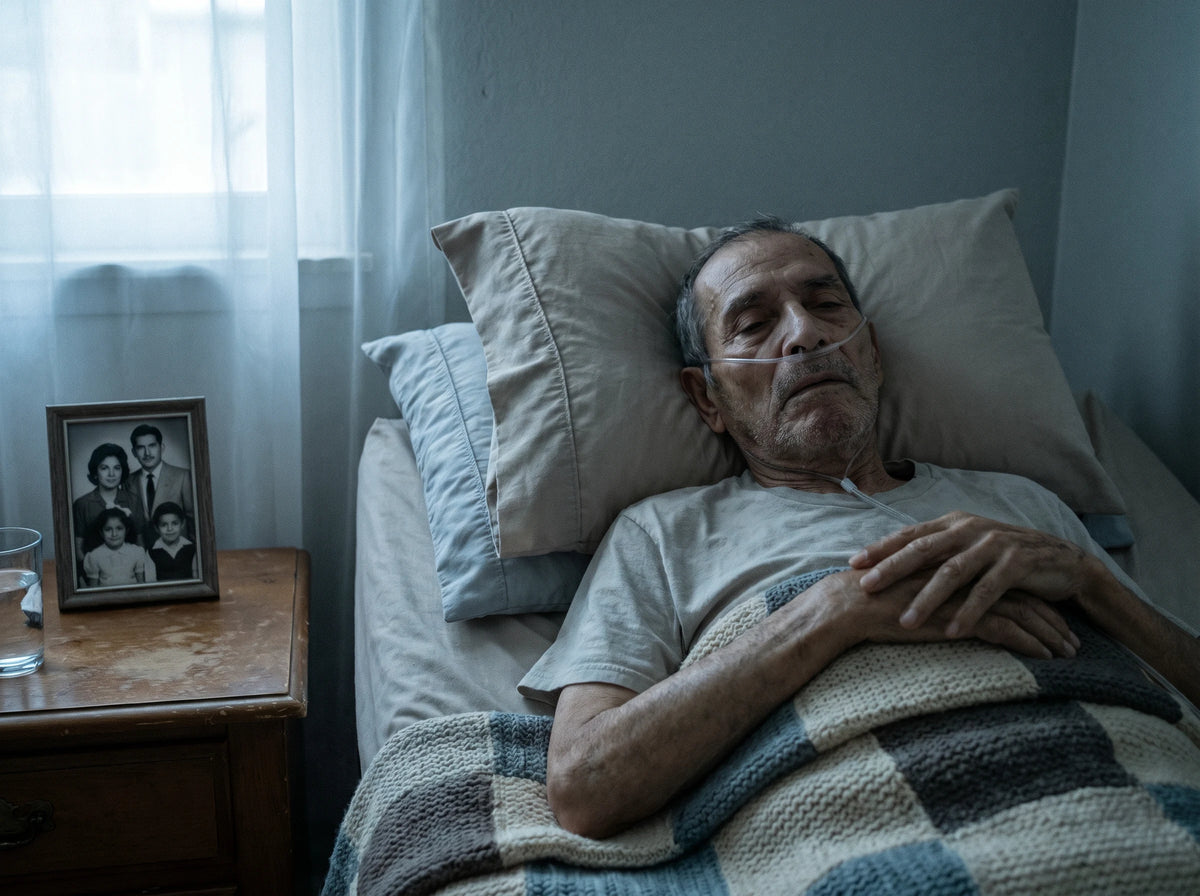
"I coughed every morning, I would get out of breath climbing the stairs, and my tests were already showing obstruction. My doctor had the inhaler ready. Inside, I saw my dad during the last 8 years of his life — the oxygen tank, the bones that prednisone had left like chalk — and I knew that I was not going to repeat his story."

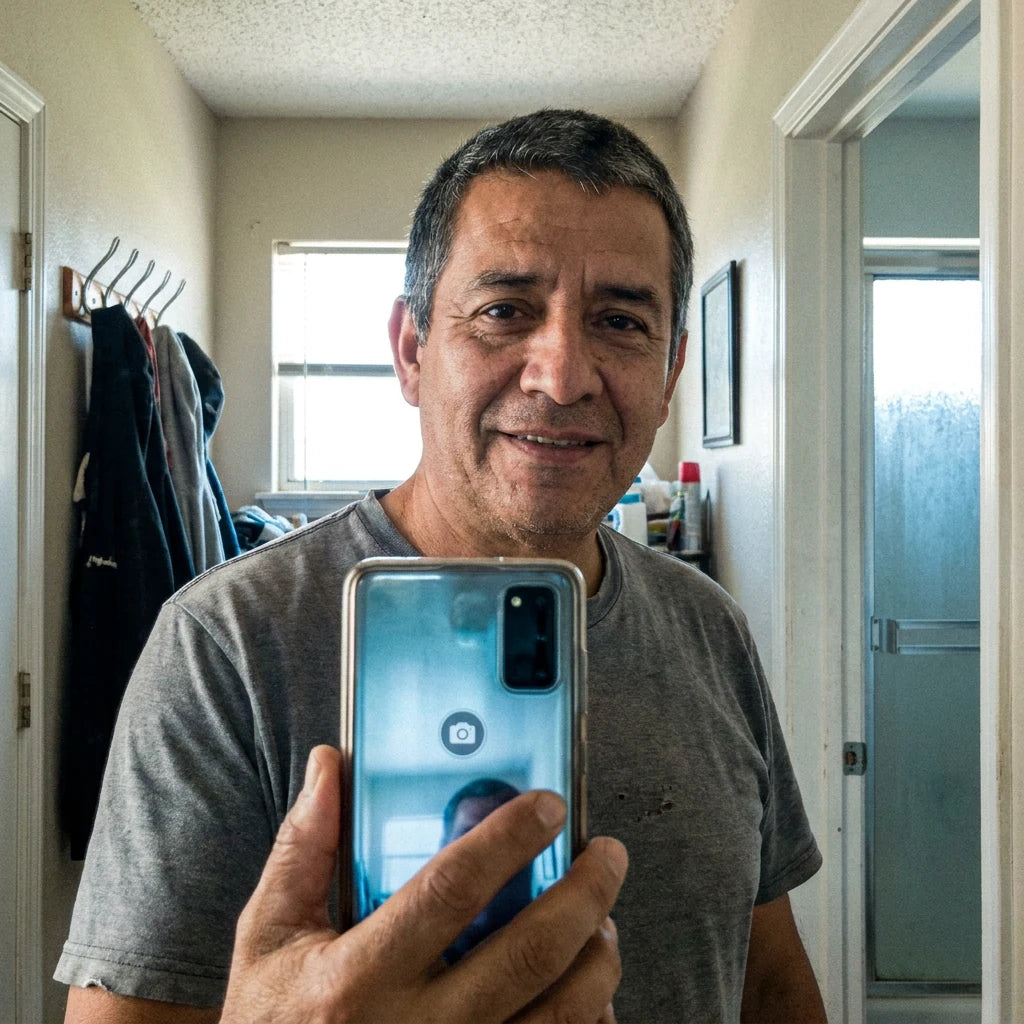
By David R., 52 years old · Houston, TX
Rated 4.7/5 | Over 7,500 customers in the USA

My dad died at 64.

I am 52.

And by the time you finish reading this, you are going to be furious. Just like I was.

It started with Salbutamol. The pulmonologist told him it was "only for emergencies," that he would catch his breath in minutes. Six months later, he was already on Combivent twice a day. Then they added Symbicort and prednisone for every flare-up.

The corticosteroids made his face swell. They raised his blood sugar. They thinned his bones until he broke a rib just from coughing. My mom said it was like watching the man she married slowly fade away.

Eight years of changing inhalers. And not once did anyone ask him why his lungs couldn't clear themselves in the first place.

He died suffocating in his own bed. His symptoms were "controlled" on paper. But his lungs inside were turned to cement.

My mom's words at the funeral, which I barely heard through my own sobbing: "They told him to use the inhaler and wait. The waiting killed him."

Three weeks ago, my doctor closed the office door, sat down, and said the same word they used with my dad: obstruction.
The Day My Doctor Used the Same Word

"David, your lung test results concern me. There is an obstruction in your airways. We are going to have to monitor you closely."

My throat tightened. The walls tilted.

Obstruction. The same word. The same script they read to my dad for eight years.

I sat in the car, in the clinic's parking lot. I couldn't even put the key in the ignition. I just gripped the steering wheel, with the results on the seat next to me.

I didn't sleep that night. I laid there watching the ceiling fan spin. 11:52 PM. 12:41 AM. 1:38 AM. At 2:23 I gave up, went down to the kitchen, and opened my computer.

I typed: how COPD progresses. The results loaded. "There is no cure. Inhalers control, they do not reverse. It is recommended to monitor the deterioration."

I read forums. Faces I would never know, stories that could be mine. "They told him to watch and wait. We watched. We waited. He died at 61."

Three days later the office called to schedule the follow-up. "Monitor it while it gets worse?" I asked. "My dad did that for eight years. He died anyway." I hung up.

I was NOT going to "watch and wait." And I dove into researching like I had never researched anything in my life. I started with the most basic question in the world, one that no one had ever explained to me: what exactly is it that clogs a smoker's chest?

And before I tell you what I discovered, I need to tell you something that no one told me during all that time of fear:

You won't have to quit smoking to get started.

I know you've tried. The patches, the gum, the pills, pure willpower. I know you relapsed and that you're tired of fighting yourself and being lectured by everyone.

This isn't about quitting. No patches. No pills. No lectures.

It's about something your body already knows how to do—and which the cigarette turned off without anyone explaining it to you. Because that question had an answer. It was in the studies. It had been published for years. And almost no primary care doctor reads it.

Your lashes are not dead. They are sleeping.

And that is when it all came crashing down on me. The answer wasn't to "support" the lungs. It was to reactivate what had stopped cleaning them from the inside.

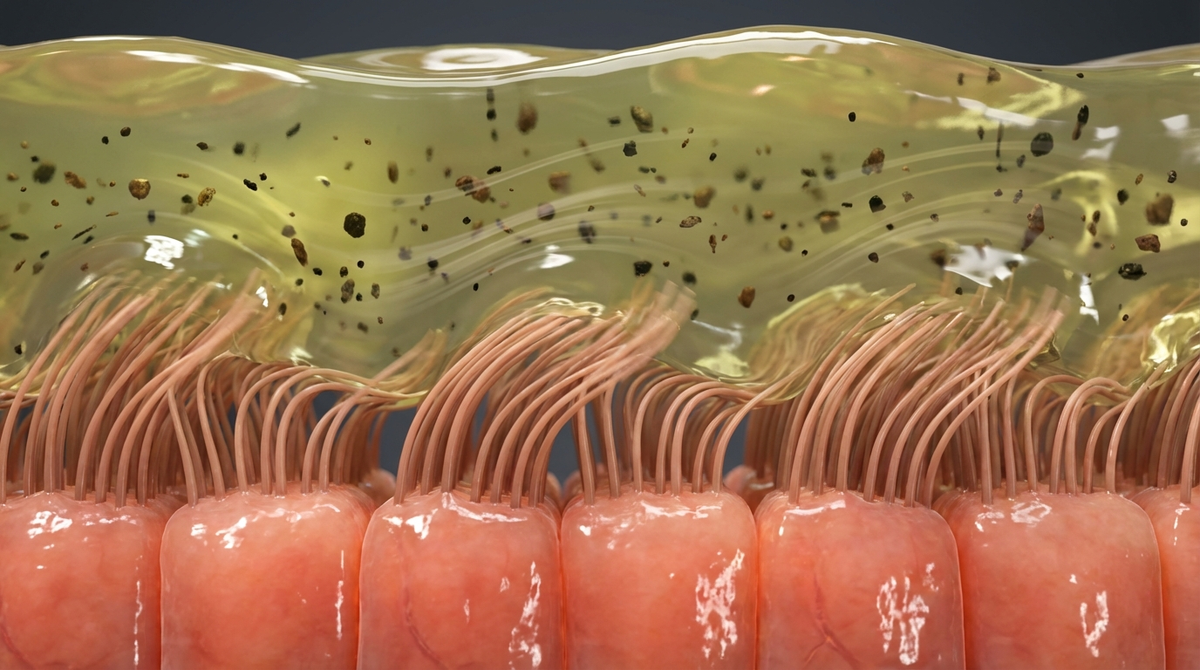
What cleans your lungs at a cellular level are microscopic structures that line your airways: cilia. Billions of tiny little hairs that move like waves, 16 times per second, pushing mucus with toxins upward, out of the lungs. It is the natural cleaning system you were born with.

But cigarette smoke does two things. First: it leaves a sticky layer of tar on the walls of your bronchial tubes. As if you were sprayed with glue on the inside. Second: those little hairs get covered under the tar. They don't die. They fall asleep. They stop sweeping.

Do you know what happens to your cilia after years of smoking? They become up to 70% paralyzed. And here is what no one tells you: even if you quit smoking tomorrow, the cilia do not reactivate on their own. They remain motionless, buried in hardened mucus, without the strength to push anything upward.

And when the cilia stop sweeping, the phlegm doesn't come out. It stays. It accumulates. It thickens. Layer upon layer, month after month, year after year. That is what your tests show as "obstruction."

That is why you cough for ten minutes in the morning before you can speak. That is why your chest feels heavy as soon as you wake up. It’s not that you produce too much phlegm. It’s that your cleaning system is turned off.

That was what was happening to my dad on the inside. And to me. And to every smoker who was given an inhaler and told to wait.

Now understand me well, because this is what took me weeks to understand — and what my dad was never told.

The inhaler opens the tube. It relaxes the muscle so that more air can get in for a while. And it feels good for a few hours.

But the inhaler doesn't touch the tar. It doesn't wake up the cilia. It doesn't remove the stuck phlegm. It opens the door — while the filth keeps building up inside.

And the drugstore syrup? The Mucinex the guy at the counter recommended? That loosens the top layer of phlegm, the newest part. It works for a cold. But smoker's phlegm is stuck to a layer of years of tar — and the syrup doesn't move that.

None of those things do the only thing that needs to be done: wake up the dormant cilia and loosen the tar, at the same time, from the inside.

What I Found in the Studies — And What No Doctor Had Ever Told Me

One night, twelve days before my appointment, I called an old family friend. An integrative medicine doctor, semi-retired. He told me something no doctor in a consultation had ever told me.

"The problem isn't supporting your lungs, David. It's that the cilia are paralyzed and you aren't reactivating them. You have to wake them up and loosen the stuck phlegm, from the inside. First you clean — and then the lung can truly start to recover."

And he told me about a plant. Not an opinion, not a TikTok fad. More than 300 published studies. Universities in Turkey, Poland, and Iran have been studying it for decades.

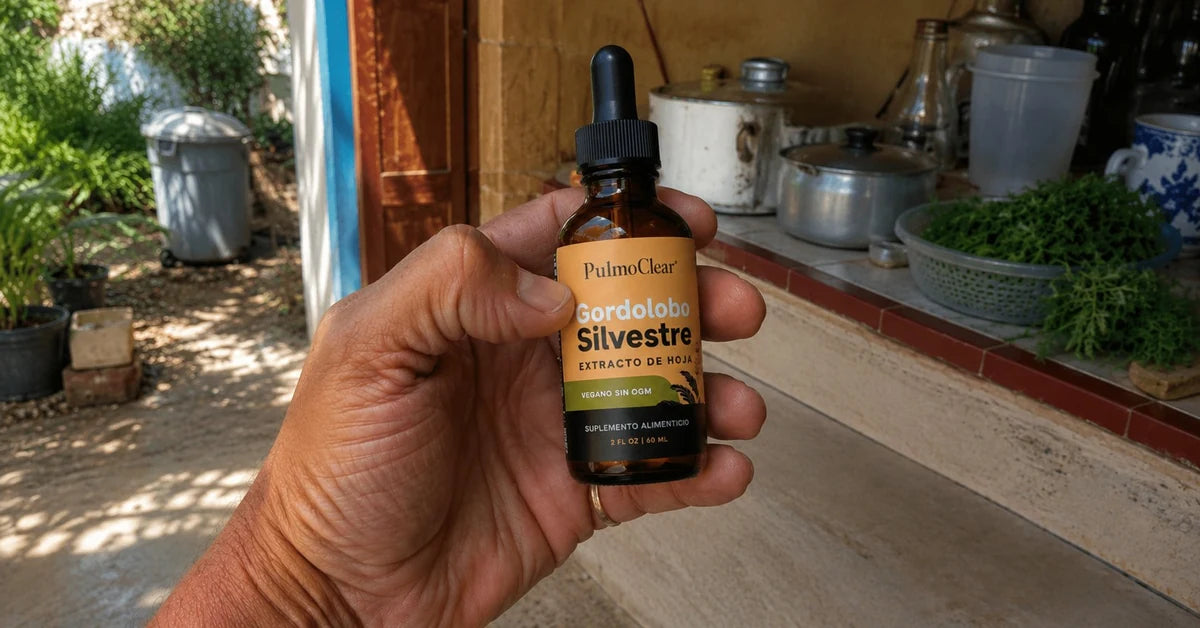
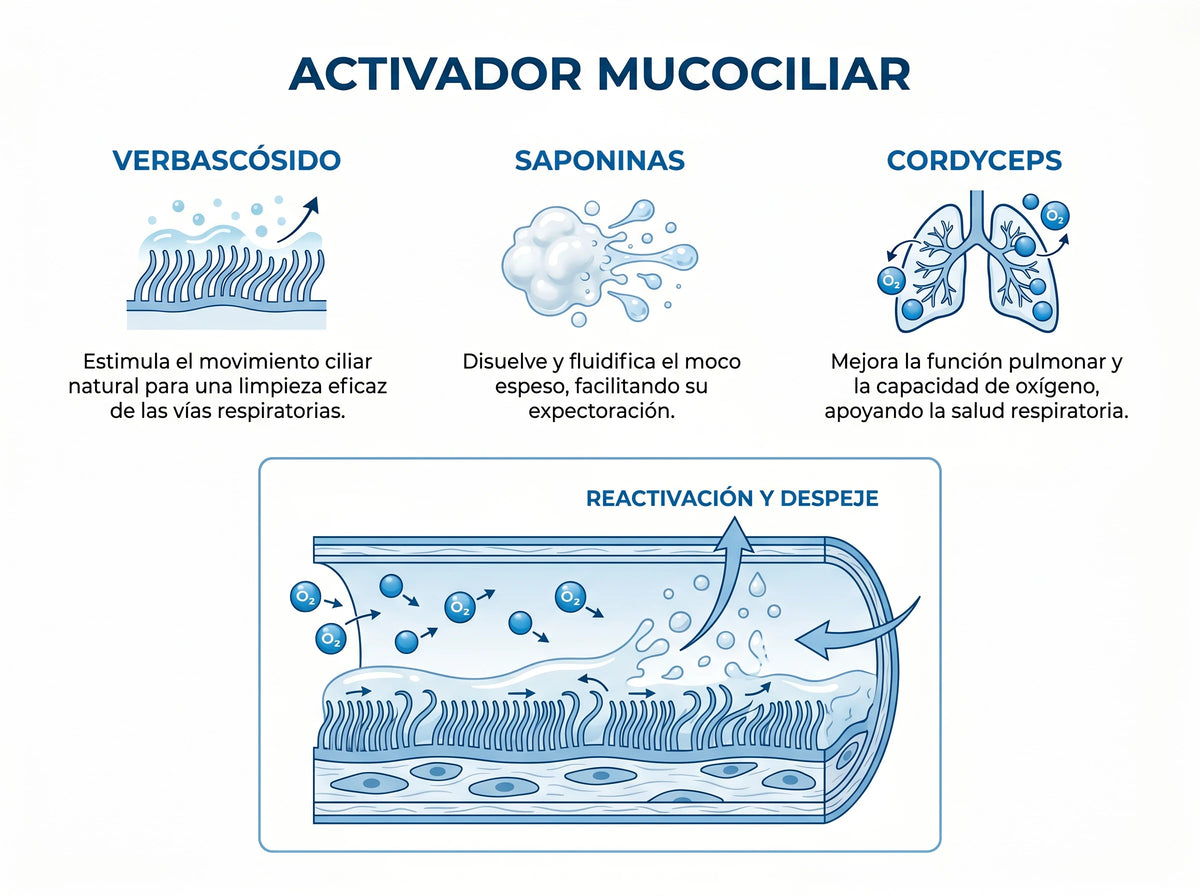
It’s called Mullein — the common mullein, the one our grandmothers used to take for coughs. But the detail I had never been told is this: it is not the leaf or the tea that reactivates the cilia. It is the concentrated extract, where three compounds are released that boiling water never extracts:

✓ Verbascoside reactivates paralyzed cilia that stopped moving years ago.
✓ Saponins dissolve hardened mucus stuck to the walls.
✓ Flavonoids reduce chronic inflammation of the airways.

And here is what finally convinced me — and what cheap mullein brands do NOT have: a second ingredient, Cordyceps Militaris, which improves the lung's ability to use oxygen. You don't just clean the tube: you start making the most of the air coming in again. That is why people report climbing stairs without getting winded, not just coughing less.

Wake up the system. Release what is trapped. Oxygenate again. From the inside. Without asking you to quit smoking first. That was what my dad needed all this time. And what his inhalers were never going to give him.

So, why does your doctor just tell you "stop smoking and wait"?

For a simple and rather ugly reason.

Doctors are trained to treat disease with what is prescribed and sold. The inhaler has a brand, a representative, a pharmaceutical company behind it. A plant that reactivates your own cleaning system doesn't make anyone any money.

Do you know what CAN be patented? Salbutamol. Combivent. Symbicort. Prednisone. And there is a multi-billion dollar industry that DOES NOT make money if your lungs clean themselves. Telling you "stop smoking and we'll monitor you" gets them out of the problem in five minutes. That's what they did with my dad for eight years.

But you are not a failing patient. You are a man with a system that is turned off and can be turned back on. The damage is not your fault — and you don't need to stop smoking to start reversing some of it.

When I understood that, I knew I had to find the right way to take Mullein. And that's where I ran into the second problem. Almost all the mullein sold is useless — and I spent weeks and over $90 learning that the hard way. For three reasons:

The form: in capsule, tea, or gummy form, the active ingredients break down in stomach acid and you absorb barely 5%. You need a liquid that is absorbed under the tongue, at 95%, straight into the blood. The dose: most have a 1:5 diluted tincture — a pinch far below what actually moves the needle in studies. The purity: without standardized verbascoside on the label, you don't know if you are paying for the plant or for filler.

I was about to throw in the towel. That was until, in my search, I came across a Latino pulmonologist — a lung doctor who serves our community, who speaks our language. Dr. Miguel Serrano. He explained, step by step, exactly what the family friend had hinted at: why the chest gets congested, why the inhaler only opens the door, and what the one thing was that truly reactivated the cilia in his patients.

He and his team had formulated a single formula that accomplished the three things the others didn't: maximum potency concentrated extract (not a diluted tincture), a sublingual liquid with 95% absorption, and verbascoside standardized and verified by third-party analysis.

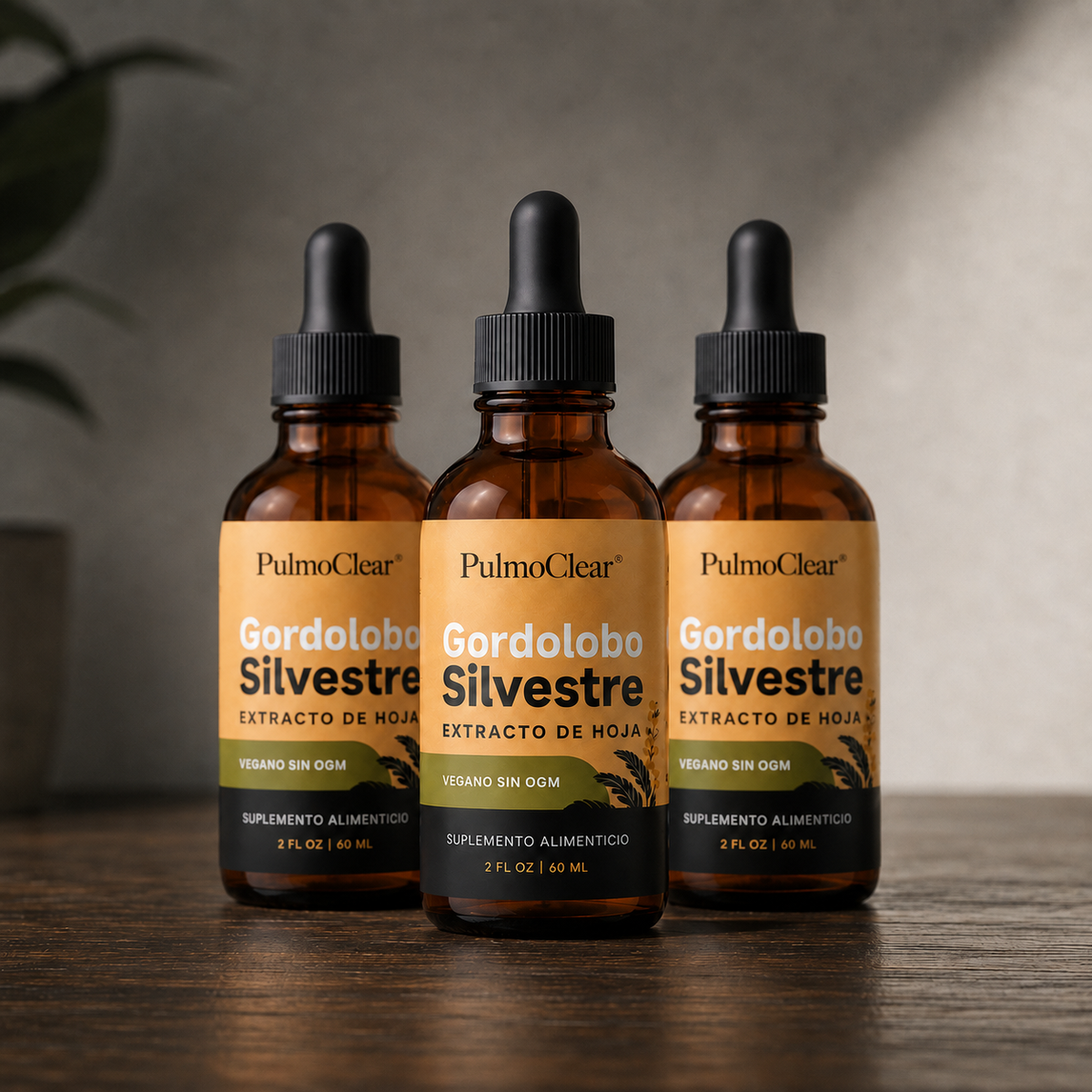
It is called PulmoClear®.

Liquid drops placed under the tongue, twice a day. Maximum potency Mullein + Cordyceps Militaris for oxygen, plus three plants that work together to loosen phlegm, open the bronchi, and reduce inflammation. They gave a name to what it does: the Mucociliary Activator™.

No underdosed capsules. No tea. No syrup that only touches the top layer. It's the only way I found to reactivate the cilia and loosen tar at the same time, directly where it needs to go, while I go on with my life as usual.

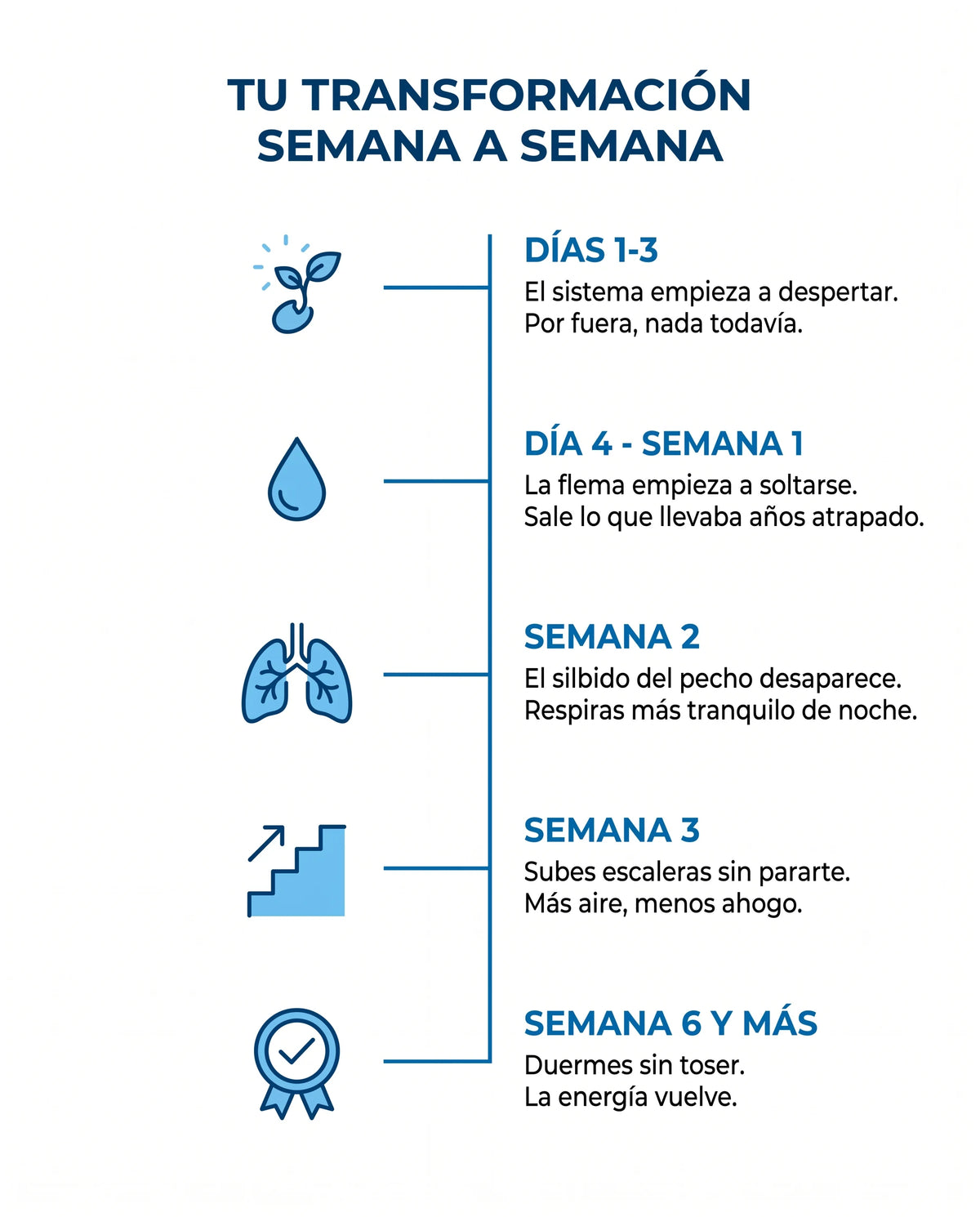
I started with two drops a day, sublingually, with breakfast. The first three days, nothing. On the fourth day, I coughed in the shower and dark phlegm came out like I hadn't seen in years — I thought it was a coincidence.

The second week, the wheezing in my chest when I breathed at night stopped. The third week, I noticed it climbing the stairs at work: three flights without stopping to pretend I was looking at my phone. By six weeks, I was sleeping through the night, without waking up coughing at 4 a.m. for the first time in a decade.

After three months, I went back to the doctor. Another spirometry. My lung capacity had increased by 23% compared to the previous measurement. She looked at the results. She looked at me. She looked back at the results. "Well… whatever you're doing, keep doing it."

No prescription. No inhaler. No lecture.

And the craziest part: I didn't even have to quit smoking to start. No patches. No pills. My body was finally clearing out what had been trapped for years. I broke the pattern. I broke the hereditary line that had taken my dad.

Others Who Also Refused to Repeat History

After sharing my story online, messages started pouring in from people who had also seen a father, a brother, or a partner go through the same thing. Here are some that left the biggest mark on me:

"The first thing I asked before ordering it was if I had to quit smoking. Because if that was the condition, I wasn't going to buy it. They told me no, that it was made for active smokers. That convinced me. I’m still at my 10 a day. But the cough has changed. It comes out easier, my chest isn't as tight when I wake up. My wife doesn't give me that look anymore when she hears me in the bathroom."

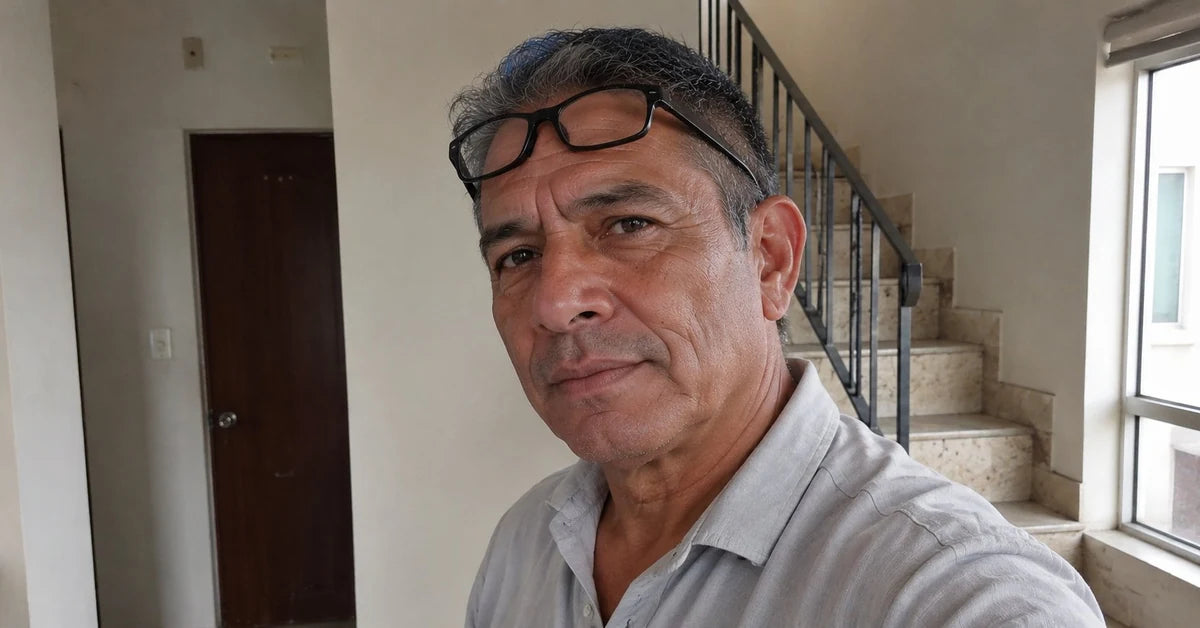
— Jorge M., 51 years old, Houston TX

"My dad died of lung problems, just like the one in the story — I read that part three times. My son told me he didn't want to hug me because I smelled like cigarettes. That really got to me. I had been smoking for 25 years and had already resigned myself to it. Three weeks into using PulmoClear, I was sleeping straight through the night without coughing. My wife noticed it before I did. I'm still smoking — I cut back a little without meaning to — but my body feels different."

— Hernán D., 42 years old, Houston TX

"I am an engineer, I am a skeptic by trade. I tried 3 brands of mullein drops before — all cheap diluted tinctures, none with standardized verbascoside on the label. What convinced me about PulmoClear were two things: the concentrated extract and the published third-party analyses. Week 8: my spirometry went up 21%. The doctor on the site speaks Spanish and explains the mechanism without selling you snake oil. The data doesn't lie."

— Eduardo R., 58 years old, Los Angeles CA

What Is Really Happening While You Put It Off

If you are reading this with that morning cough still in your chest, wheezing while climbing stairs, with a doctor who already told you "obstruction" and told you to wait, terrified of following the path of your father, your brother, your close friend — listen to this.

This is the moment. Not in three months. Now.

Ciliary damage doesn't just stay the same. It gets worse. Every month without reactivating the cilia: more tiny hairs become permanently paralyzed, hardened mucus starts to calcify in your airways, alveoli lose elasticity, and the pharmaceutical system waits for your next appointment with an inhaler in hand.

There comes a point where the damage can no longer be reversed. The window to reactivate the cilia isn't open forever. I'm not telling you this to rush you with an offer — I'm telling you this because it's what is happening inside your lungs, whether you act or not. It's what happened to my dad while he "waited."

The good news: today that window is still open. But Mullein only works if it's delivered properly: concentrated extract, not ground leaf. Standardized verbascoside. Sublingual. PulmoClear was the only one that met all four.

45-Day Guarantee: Try It and Feel It.

Even if you're skeptical — you should be, I was — grab a bottle and try it.

You don't have to change anything about your routine. One drop under the tongue in the morning, another in the afternoon. You can take it while smoking.

Pay attention to what your body tells you: if your morning cough lasts less time. If the phlegm comes up easier. If your chest feels less heavy when you wake up. If you reach for your inhaler less often.

Waking up your cilia takes time — it's not magic, it's restarting a system that had been shut down for years. That's why PulmoClear comes with a 45-day full money-back guarantee.

If you don't feel the difference within that time, you get every last dollar back. No questions. No forms. You don't even have to return the bottle. The risk is theirs, not yours.

My dad spent eight years "monitoring" while his lungs were drowning from the inside. They told him to use the inhaler and wait. The waiting killed him.

I can't go back and explain this to him sooner. But I can explain it to you today.

The inhaler does one thing. There is another thing it wasn't designed to do. And as long as that other thing isn't done, your chest will continue to feel heavy every morning — and the word "obstruction" on your chart will continue to get worse.

Don't wait to be the one who ended up with an oxygen tank. Don't wait for your grandkids to remember you coughing.

You can wake up and talk without coughing first. You can carry your grandchild without running out of breath. Without quitting smoking. Without pills. Without a lecture.

I am not going to end up like my dad. And you don't have to either.

— David R.
Houston, TX